


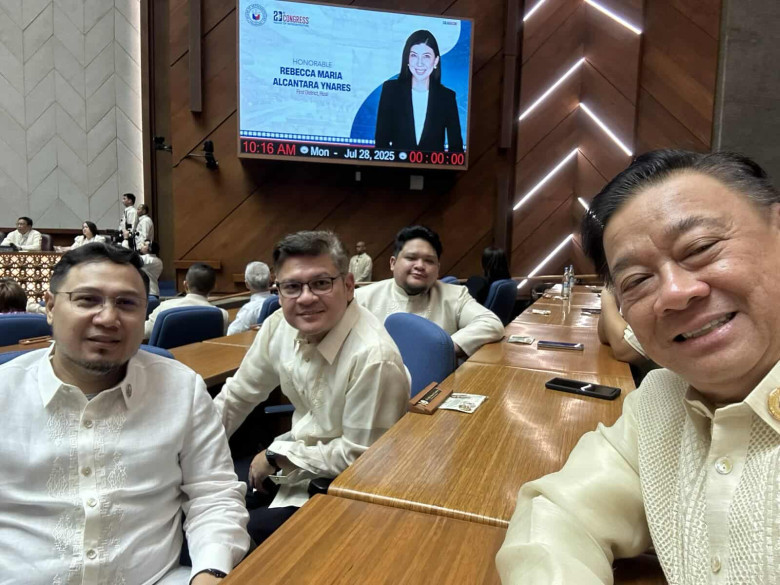
3rd District Rep. Isidro Ungab meanwhile opted to abstain from the voting session.
Reps. Paolo Duterte and Isidro Ungab issued separate statements declaring their independence from both the majority and minority blocs in the House of Representatives, distancing themselves from what they view as an increasingly dysfunctional political process.
In a strongly worded statement, Rep. Paolo Duterte explained his decision:
“I did not vote for Speaker and I did not join the so-called Minority because I refuse to take part in a political circus that has long forgotten who it is supposed to serve — the Filipino people.”
“I represent the people of Davao City, not the political puppeteers nor the self-serving actors parading as public servants in Congress,” he continued. “I will not lend my name nor my vote to any side that treats leadership as a prize, not a responsibility.”
Duterte lamented the state of the legislative chamber, describing it as “a hollow theater where the script is written by the powerful” and “a game of thrones being played at the expense of the people.”
“If standing up for dignity and refusing to join this farce is seen as defiance, then so be it,” he said. “I did not run for Congress to play along. I ran to represent the interests of my constituents — with honor, conviction, and the courage to walk away from what is wrong.”
Rep. Isidro T. Ungab, a senior lawmaker now on his third consecutive term, echoed the call for independence in his own statement issued shortly after the voting session:
“Members of the House who choose not to affiliate with either the majority or minority can rightfully be considered independent members,” he explained.
Ungab cited legislative precedents in both the Philippines and international bodies, including the U.S. Congress and British Parliament, where lawmakers have chosen to remain independent to uphold impartiality and principle.
“This decision reflects my commitment to serve my district and the nation without being tied to partisan interests,” Ungab added.
The presence—but non-participation—of the Davao legislators during the speakership vote is a quiet yet potent act of political dissent, reflecting frustration over the state of House leadership contests and what they perceive as transactional politics.
While their decision does not affect the outcome of the speakership election, it underscores a growing sentiment among some lawmakers to resist aligning with traditional power blocs and instead advocate for more independent, constituent-driven legislative work.
With the Dutertes and Ungab opting for independence, the House may face a more assertive and principled minority of unaffiliated lawmakers—those willing to speak up, even in the face of overwhelming partisanship.











Facebook Conversations