


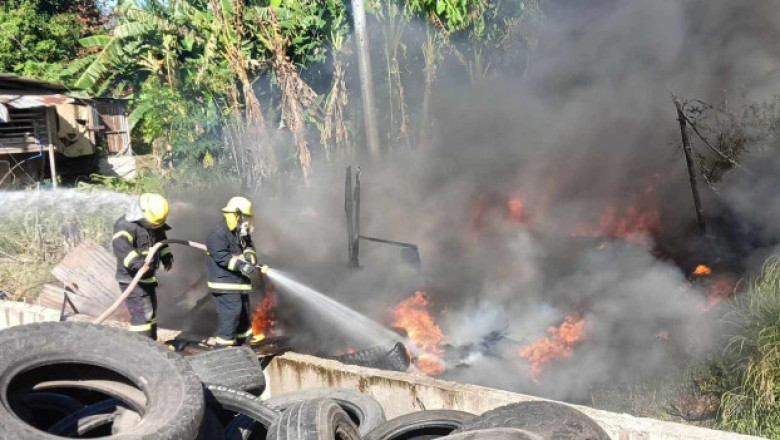

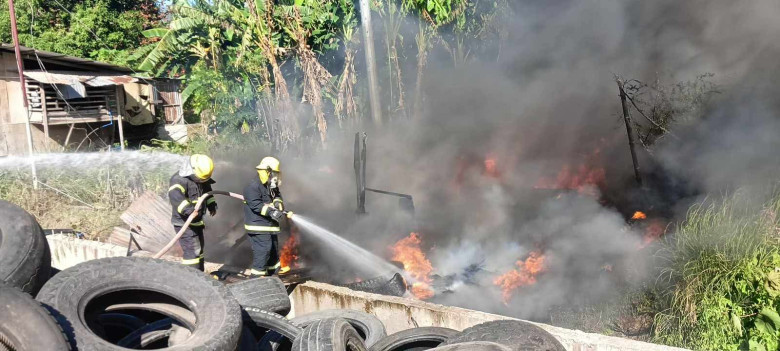
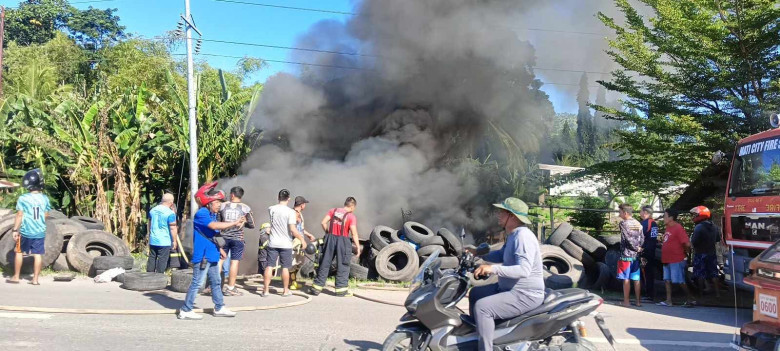
The blaze ignited beside a dike when a small fire, lit to repel mosquitoes, accidentally spread to the nearby pile of tires, according to the shop owner. Firefighters responded promptly and managed to contain the flames, officially declaring the fire out by 8:36 a.m. No injuries were reported in the incident.
The tire stockpile is owned by Felix Luzano Baga, 67, who operates a vulcanizing/tire shop in Bilawan 1. Baga’s wife, Maricar Puerto, 46, and their daughters, Princess L. F., 18, and Precious L. F., 16, were at the site when the fire erupted but escaped unharmed.
Baga told investigators he had ignited a small fire near the dike to create smoke as a mosquito repellent, not realizing it would ignite the scrap tires.
According to the Bureau of Fire Protection (BFP), the flames consumed a significant portion of Baga’s tire inventory. Approximately 150 old rubber tires were destroyed. The fire also burned around 30 heavy-duty “Saddam” tires (out of about 300 stored on site), about 50 jeepney tires (out of 200), and roughly 100 tires for multicab vans. Three bundles of dried coconut husks (locally known as palwa sa lubi) that were stored nearby also caught fire.
Thanks to the firefighters’ quick action, no surrounding structures were affected by the blaze.
BFP investigators have initially classified the incident as accidental. However, authorities noted that it could have been prevented with more caution. The incident has prompted local fire officials to remind the community about the dangers of improper burning practices.
Fire officials said the blaze highlights the extreme dangers of burning rubber tires. Tire fires produce massive plumes of thick, black smoke laden with toxic chemicals that pose serious health risks to anyone nearby. Fire authorities warned that burning tires “poses a threat to health because its smoke will harm our lungs”. They added that tire-burning creates fire hazards and releases harmful gases like carbon monoxide, which can “threaten the immediate environment” .
In addition to health risks, tire fires can heavily pollute the environment , contaminating the air, soil, and water. The U.S. Environmental Protection Agency (EPA) notes that for every million tires burned, about 55,000 gallons of oil can seep into the environment as runoff if not contained . This toxic runoff, along with smoke-borne pollutants, can linger and cause long-term damage to local ecosystems even after the flames are extinguished.
In light of this incident, authorities provided the following fire safety reminders for the public:
Refrain from burning tires or any garbage. Open burning of solid waste is prohibited by law and poses serious fire and health hazards.
Avoid lighting any fire near homes, dried vegetation, or other combustible materials . Even a small controlled fire can quickly spread if conditions are windy or fuel is nearby.
Use safe alternatives to repel insects. For example, utilize mosquito coils or other approved repellents instead of igniting rubber or other hazardous materials to produce smoke.
Always supervise open flames and prepare for emergencies. Never leave a fire unattended, and keep firefighting tools (water, sand, extinguisher) on hand. Ensure fires are completely extinguished before leaving them.
Local fire officials hope that by following these precautions, residents can prevent similar incidents and the dangerous consequences that come with them. The BFP emphasized that fire safety is a shared responsibility and that seemingly simple actions—like burning trash to fend off mosquitoes—can lead to disastrous results if not done safely.(Mati CIO)












Facebook Conversations