


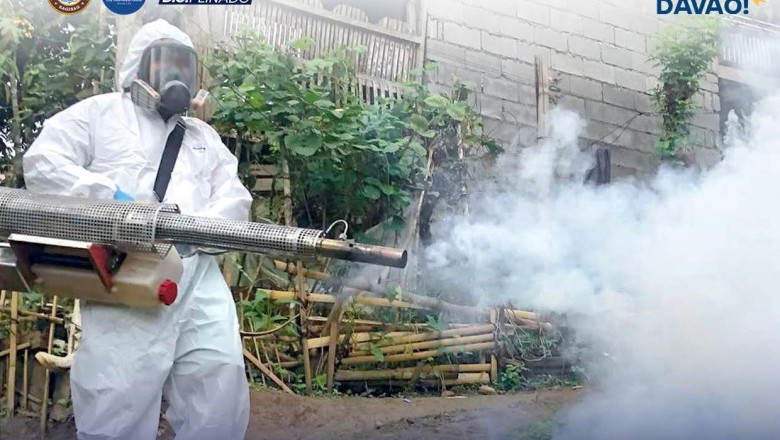

During this period, the city logged a total of 644 cases, significantly lower than the 1674 reported cases in the same five-month span last year.
Melodina Babante, Program Manager of the CHO’s Tropical Diseases Prevention and Control Unit, said in an interview with the Madayaw Program over city-owned Davao City Disaster Radio that the decline may be attributed to several factors, including the implementation of City Ordinance No. 0401-20, Series of 2020.
This ordinance establishes a barangay-based approach in eradicating mosquito-borne diseases. Under this measure, barangays are required to create a Barangay Mosquito-Borne Diseases Task Force (BMDTF) that will carry out grassroots, community-level interventions to prevent the spread of mosquito-borne diseases such as dengue.
Babante added that the CHO continues to strengthen its call for barangays to have functioning BMDTFs as this significantly help reduce the number of cases in the city.
The CHO’s consistent conduct of information education campaigns in the community has also contributed to the decline, as individuals armed with the right information are able to make informed decisions that benefit the community.
Despite the drop in cases, Babante assured the public that the CHO continues to implement preventive interventions.
“Wala mi ni kompyansa. Every day naga-adto mi sa mga barangays lalo na g’yud ‘tong naa’y mga reported cases kay para mamonitor matagaan og hinanali nga intervention ang kana nga mga concern sa barangay (We didn’t become complacent. Every day we go to the barangays, especially those that have reported cases, so that we can monitor and provide immediate intervention to those concerned in the barangay),” she said.
Babante also shared that poor health-seeking behavior among the public remains one of the challenges in encouraging patients to go to the nearest health center or hospital for dengue testing.
She said that there are still patients who do not go to health centers or hospitals for check-ups and testing even when they already have a fever for more than 24 hours.
Early detection is crucial to prevent complications that could lead to fatalities and to ensure that patients receive proper intervention and medical care.
Dengue NS1 tests are available in health centers across the city. This blood test enables rapid diagnosis of dengue fever in its early stages. Nurses, midwives, and personnel from the tropical division are trained to administer the test, especially in far-flung barangays.
Dabawenyos are reminded to maintain a clean environment, segregate wastes properly, destroy possible breeding grounds of mosquitos, and to immediately go to the nearest health center or hospital should they experience symptoms of dengue. CIO









Facebook Conversations