


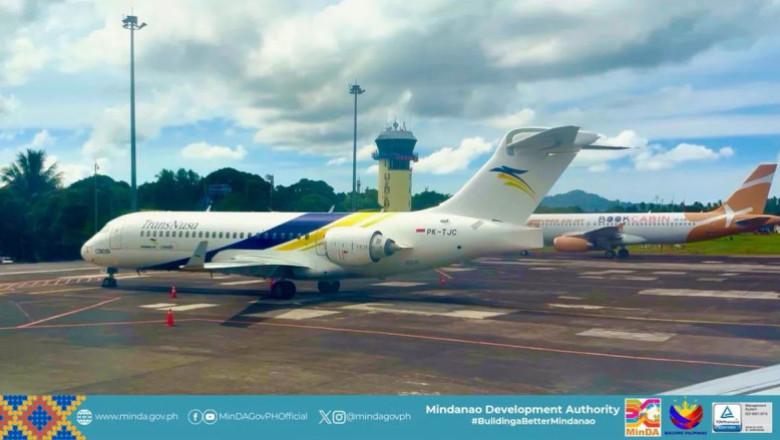

Mindanao Development Authority Deputy Executive Director, Romeo Montenegro said the initiative is part of a joint effort by the Mindanao Development Authority, Department of Tourism, and Department of Trade and Industry to revive connectivity between Mindanao and North Sulawesi under the BIMP-EAGA framework.
“We need to be able to reestablish the direct connectivity, flights between Davao and Manado. We have to create the demand, both for tourism and business, so airlines can decide to serve the route again,” Montenegro said.
At present, travelers between Davao City and Manado must endure a long and indirect journey that takes around 19 hours or more, involving multiple connecting flights through regional hubs and, in some cases, additional sea travel. Restoring a direct flight would immediately reduce travel time to just over an hour, creating a seamless air link between Mindanao and North Sulawesi.
Montenegro emphasized that sustaining the route requires strong demand generation through tourism and trade linkages.
“Connectivity can only be sustained if we build strong demand through tourism flows, trade exchanges, and investment partnerships between Mindanao and North Sulawesi,” he said.
Previous attempts to operate direct flights between Davao and Manado were discontinued due to low and inconsistent passenger demand, limited cargo volume, and underdeveloped tourism linkages, compounded later by disruptions caused by the COVID-19 pandemic.
Montenegro said what's different this time is the deliberate “demand-first” approach, where government agencies and local stakeholders are actively building tourism circuits, trade flows, and LGU partnerships before fully restoring air services—rather than relying solely on airlines to sustain the route on their own.
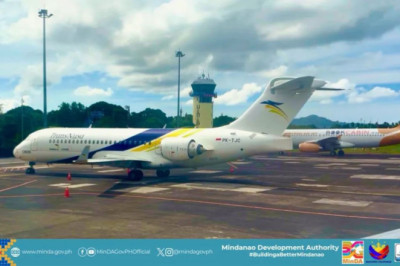
During the outbound mission, the Department of Tourism and MinDA also held a separate meeting with key officials of TransNusa, who expressed interest in reviving the Davao–Manado route, signaling renewed private sector confidence in the corridor’s potential.
Department of Tourism Region XI Director Tanya Rabat-Tan emphasized that reviving the route remains a key priority under their regional tourism agenda.
“Part of our commitment is really the revival of the Davao–Manado connectivity. We are working on route development together with our central office, the Civil Aviation Board, and the Air Service Development Committee,” Tan said.
She added that the Department of Tourism is also pushing to strengthen tourism exchanges between the two destinations, including education, medical and wellness tourism, dive tourism, and adventure activities.
“There are many opportunities that we already saw, and we expect to discover more through engagements with our counterparts here,” she added.
The mission also advanced the Davao Triangle Gateway Corridor, involving officials from Davao de Oro and Davao Oriental, positioning eastern Mindanao as a unified gateway to the wider BIMP-EAGA region.
Officials said the corridor is essential in building the economic foundation needed to sustain direct connectivity by generating consistent passenger and cargo demand through integrated tourism, agriculture, and trade flows.
President Ferdinand Marcos Jr. has identified improved regional connectivity as a key development priority, emphasizing Mindanao’s role as a strategic gateway to ASEAN markets.
Strengthening air links such as the proposed Davao–Manado route is seen under the Marcos administration as essential in boosting trade, tourism, and investment flows between the Philippines and Indonesia.
The recent outbound mission of MinDA, DOT, and DTI in Manado aligns with the Marcos administration’s broader goal of positioning Mindanao as a more competitive and integrated economic hub in the region.
The renewed efforts to revive the direct link between Davao and Manado are expected to unlock new opportunities and strengthen regional integration, positioning Mindanao as a key gateway to eastern Indonesia.









Facebook Conversations